1999 Had Joe in the Role of Cypher in This Combination Science Fictionmartial Arts Film
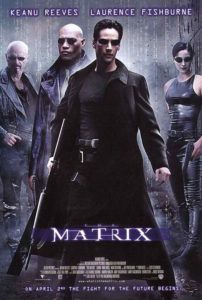
In 1999, the Wachowski siblings released a strange mix of bravado special FX, elementary philosophy, martial arts-laden combat, and mind-angle plotlines in an influential science-fiction actioner. The Matrix became a miracle ripe with possibility. Overall, information technology led to a franchise that remains entertaining but underwhelming, if just because this offset moving picture in the trilogy sets the bar very high. Existing in a cyberpunk world where the imagination sets the limits of possibility, the motion picture operates in languages ranging from figurer code to kung-fu, offering a wide array of genres composite into this otherwise classical tale of skillful versus evil. And while continuously exalted past its fervent, jealously defending fans, the moving picture seems smarter than it really is and, even while being smarter than the boilerplate actioner, has been propelled to impossibly high realms of greatness. Even though the Wachowskis never forget to engage the heed in their discussion about the nature of reality and humanity, which are then compressed into symbolic acts (such as swallowing a pill to demonstrate a conventionalities), the film too often resorts to wistful gunplay and impressive, CGI-enhanced acrobatics, all of which viewers take seen before, though rarely better.
Shot for $44 one thousand thousand in Commonwealth of australia, the Wachowskis wrote The Matrix earlier their 1996 debut feature, the stylistic crime-thriller Bound. And in the wake of The Matrix's franchise legacy, it's interesting to think back to what must take inspired them in 1990s culture. To exist sure, even while pointing toward the future, The Matrix too encapsulated much of the '90s. By the middle of the decade, hopes for virtual reality technology were however very loftier, computer hackers were condign more stylish than nerdy (meet Hackers), and dark culling music filled the radio waves (Marilyn Manson, Ministry, and Rage Confronting the Machine). As a result, the Wachowskis applied their unique vision to these elements and imagined a world where the human race's savior is a hacker who hangs out at surreptitious goth clubs. In 1999, nothing could exist libation. Simply more just existence the right movie at the right fourth dimension, the Wachowskis also created a advisedly assembled and highly stylized product, thanks in large function to the skilful lensing by cinematographer Bill Pope, who also shot Spring. Every scene and sequence looks labored over, every shot advisedly planned out, and the drab color palette beautifully equanimous. Because of the filmmakers' tireless efforts, The Matrix's visual identity is nigh mythic in a fashion its successors failed to accomplish.
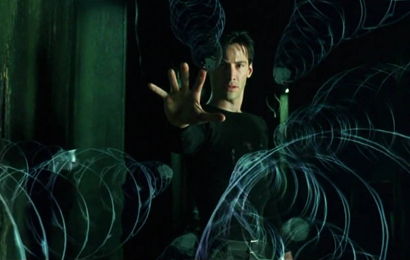
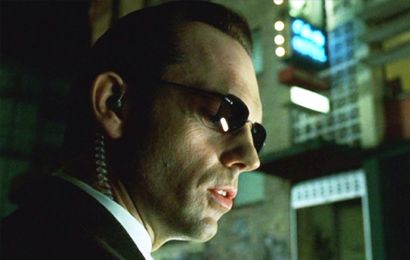
If you've been in a chimera and haven't seen it, the film centers on Thomas Anderson (Keanu Reeves), who leads a double-life: an office worker by day, and by night, he's a talented simply restless hacker who goes by the handle "Neo." Contacted by a group of wanted hackers, headed by Morpheus (Lawrence Fishburne) and Trinity (Carrie-Ann Moss), Neo learns that agents obsessed with finding Morpheus' hole-and-corner group are hunting him. The agents' leader, the dastardly Agent Smith (Hugo Weaving), seems maniacally devoted to stopping Morpheus and all that he represents. Strangely, when he and Morpheus' soldiers appoint in combat, the action bends the laws of physics. Moreover, they utilise robotics that expect like they come from far into the futurity (they do). Morpheus believes Neo is "The Ane" prophesied to save the real world, not Neo's fabricated fantasy, from car dominion. Here is where the Wachowskis' screenplay falls into long processions of expository dialogue between Morpheus and Neo, whereby Morpheus explains the manner of the earth to The 1.
Rather than just tell him he's been living in a computer-generated illusion, Morpheus talks in cryptic riddles and uses virtual reality visuals to illustrate his point. The brusk version is that machines take bred Neo and nigh other humans on the planet as a source of energy. Sometime in the 21st century, humans and machines went to state of war. The machines won and subjugated the human race. Born into embryotic pods, the homo slaves never experience the night truth of their reality; instead, the machines have constructed an intricate simulation chosen The Matrix. Homo beings carry out their lives, never enlightened that they are essentially feeding their captors. Simply a rare few inside The Matrix search through calculator codes and look for meaning. These hackers are eventually pulled out of The Matrix by others who take already escaped—a resistance based in an underground city called Zion. Morpheus explains that, long ago, someone prophesied the inflow of The Ane and through him the end of the war. Neo doubts Morpheus' claims, and his misgivings merely seem to be supported past Gloria Foster's wise Oracle.
Only Morpheus' group, surviving on a magnetic transport in the post-apocalypse, has a traitor. Zilch (Joe Pantoliano) has sold Morpheus' whereabouts to Agent Smith, so he'll be allowed back into The Matrix with his knowledge of the real globe erased forever ("Ignorance is bliss," he explains). Once Amanuensis Smith captures Morpheus, Neo and Trinity must pb a daring rescue mission, during which our hero discovers his prophesied abilities as The One: he can manipulate reality inside the Matrix, allowing him to dodge bullets and bound great distances at will. Laden in black leather, sunglasses, and auto guns, the finale plays out in almost constant slow-motion, leading to our sense that greatness unfolds earlier us. But, before long, good trumps evil (at least, Agent Smith, not the more significant robot threat), and the rebels prevail. By the final scene, when Neo calls out to others in the Matrix who may be listening and and then flies into the air like some comic book superhero, the Wachowskis' visuals have created something iconic. The viewer cannot help but be swept away.
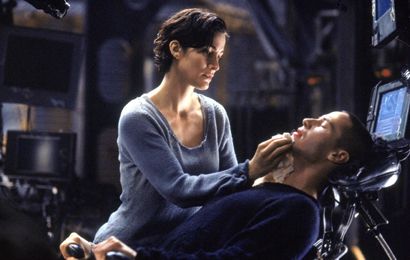 One of the lingering quibbles for this critic remains the underdeveloped love story between Neo and Trinity. It is, afterward all, a major dramatic factor in the film and a central plot point to Neo's emergence every bit The One, as Trinity's faith in him plays a crucial role in Neo becoming a messianic figure. She'due south been told she will autumn in dearest with The One, and she knows it'southward Neo when she falls for him. Merely the Wachowskis offer audiences not a single scene that would help united states of america empathise why Trinity falls for him. The screenplay lacks any insight into her motivation beyond her hero-worship, while Neo understandably finds Moss appealing for superficial reasons. After all, Reeves isn't an good when it comes to emotive performances. Too fighting for his survival in several thrilling action sequences, his graphic symbol doesn't do much beyond listening to Morpheus' exposition nearly how the world is not as information technology seems. Trinity, as well, is a tough cookie, only she'south one of many characters in the film who is 2-dimensional at best. Curiously, the two most engaging, passionate characters are Morpheus in all his devotional certainty and Nothing, the duplicitous side-villain.
Of course, one could explicate away my quibble with the film's thematic underpinnings about Predestination vs. Determinism. Did Neo knock over the vase in the Oracle's kitchen because she told him he would, or because it was his destiny to do so? Did Trinity fall in love with Neo because the Oracle prophesied she would, or because she genuinely barbarous in dearest with him? The Wachowskis embed a considerable corporeality of hypothesizing and philosophical waxing, all rooted in broad theory appropriate for an undergraduate Philosophy 101 grade. Detractors have remarked almost the fundamental nature of the literary, mystic, religious, and philosophical references throughout the pic—that information technology'due south trying to be smart just could have been a lot smarter—only remember, this is an action pic, first and foremost. A hint of philosophical insight automatically places it a pace upwards from others like it. What the Wachowskis did with The Matrix is collectively raise expectations for actionized fare; such films no longer needed to exist dim shoot-em-ups but could put some brainy concepts behind the action that would examination John Q Moviegoer. Its considerable mensurate of hints and philosophical Easter eggs leave backside just plenty for viewers to mull over. While its concepts may non be mind-blowingly original, they're getting the average commercial action fan to recollect a bit more than, which can merely exist a good thing. (So once again, a subculture of fans at present believe they're living in a computer simulation thank you to The Matrix.)
 In terms of action, The Matrix never fails to entertain or inspire awe, from the CGI post-apocalyptic futureworld to the FX-enhanced fight sequences. Its eye-popping furnishings take been designed to deliver something new (in its day) and something that has a visual correlation to the story. Inside The Matrix, Neo can manipulate the laws of Nature and reality by liberty of idea. To illustrate this, visual effects supervisor John Gaeta famously employed "bullet-time" and hyper-slow-mo (a technique invented some years prior and notably used the previous yr on the Lost in Space characteristic). The result allows characters to dodge blows and bullets, bound incredible distances, and melt reality as we know it. Endless action movies and martial arts fare take borrowed these visuals, so, for amend or worse, nosotros've been following slow-mo bullets and spinning effectually activeness heroes stuck in a freeze-frame ever since The Matrix'southward release. What'southward more, once Neo realizes the full extent of his powers, he becomes a kind of superhero with telekinetic abilities whose limits are never completely divers. The ambiguous promise held by Neo's skills and how they might manifest onscreen culminate in the conclusion of The Matrix'south indescribably exciting last shot. If only the sequels lived up to that promise.
Benefited by a sense of discovery that its subsequent two entries lack, The Matrix challenges viewers to consider their globe a construct of virtual reality that can be broken down and controlled through the power of thought. At the time, audiences responded with wild enthusiasm, creating a sort of cult-of-The Matrix that boasted over the film'south originality, despite many like themes and twists being nowadays in Alex Proyas' Dark Urban center the yr before, and many other films like it. But the initial moving-picture show's legacy carries beyond its subsequent entries and, as a stand-lone, remains a thrilling and visionary piece of innovation. Perhaps overestimated, but compelling and visionary, few pure action movies have dared to be so much and succeeded so thoroughly in making full general audiences recollect near the earth around them and how they perceive information technology. By remaining so accessible yet thoughtful, The Matrix transcends its narrative downfalls through its influence and insight—characteristics that proceed to define the Wachowskis' unique make of aggressive entertainment.
Source: https://deepfocusreview.com/reviews/the-matrix/
0 Response to "1999 Had Joe in the Role of Cypher in This Combination Science Fictionmartial Arts Film"
Postar um comentário